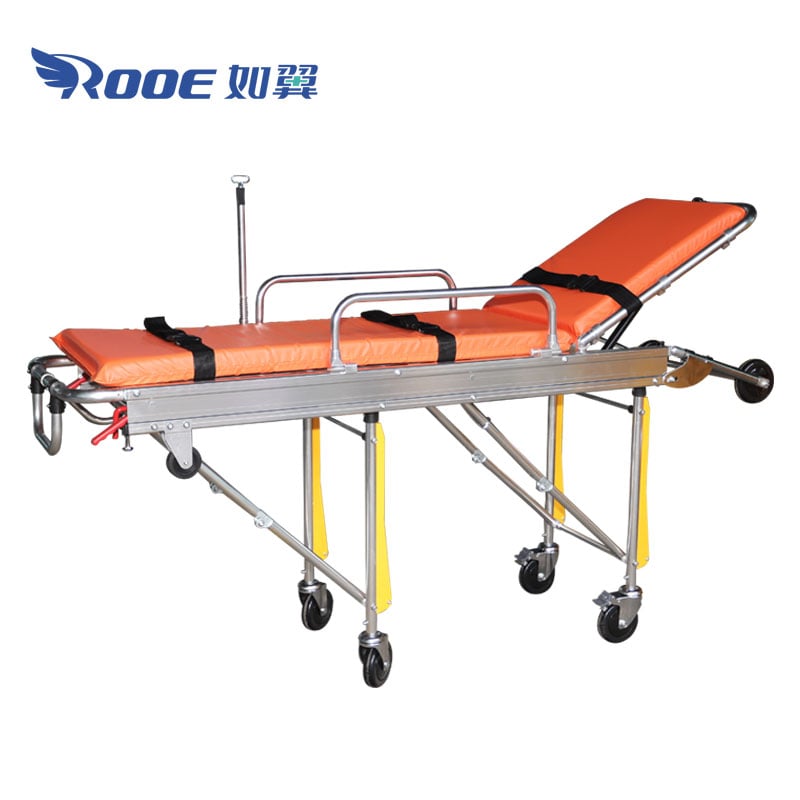
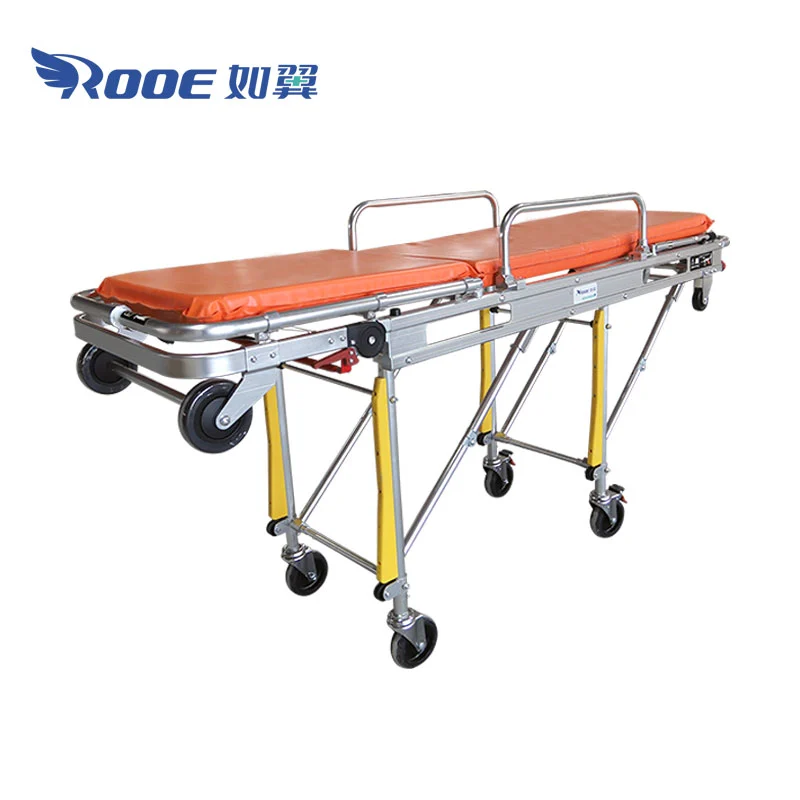
In emergency medical services, the ambulance gurney is not only essential for patient transport but must also be seamlessly integrated with the vehicle’s internal stretcher platform. A secure and reliable connection between the gurney and platform is essential for ensuring stability during rapid transit. This article explores how the stretcher locking system works, and why ambulance gurney and stretcher platform compatibility is crucial for modern emergency response systems.
Components of the Stretcher Platform System in Ambulances
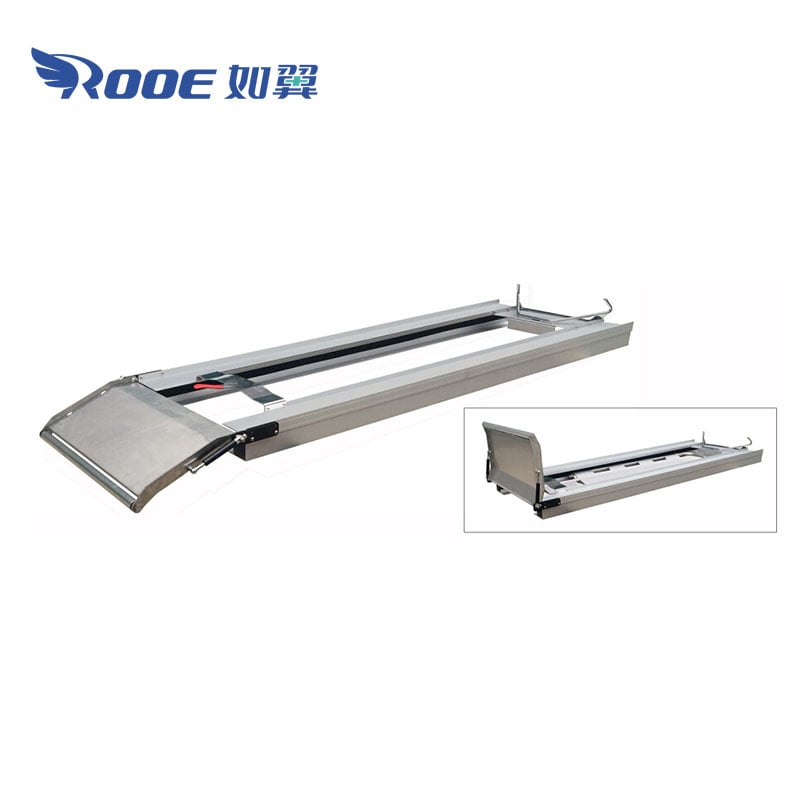
Inside the ambulance, the stretcher platform is the mounting base designed to support and lock the ambulance gurney. It typically includes the following components:
-
Guide Rails or Roller Track System
These components guide the gurney as it slides into the vehicle smoothly, reducing physical strain on responders and avoiding any jamming or tilting.
-
Stretcher Locking System
This mechanical or electronic device secures the gurney in position once fully inserted, preventing movement during vehicle motion.
-
Shock Absorption Mechanism
Some high-end stretcher platforms are equipped with shock-dampening systems to minimize the impact of road vibrations on the patient.
Principles of Ambulance Gurney and Platform Compatibility
1.Precision in Dimensional Matching
Each ambulance gurney must be specifically designed or selected to match the dimensions and locking points of the corresponding stretcher platform. These include wheelbase width, track alignment, and lock locations. A mismatch may result in instability or failure to secure the gurney properly.
2.Multi-Point Locking System
Most stretcher locking systems operate with a dual-lock mechanism:
This system ensures that the ambulance gurney remains stable even during abrupt stops or sharp turns.
3.Quick Release for Rapid Deployment
A well-designed stretcher platform includes a quick-release function, allowing first responders to unlock and remove the gurney swiftly. This is critical for saving time during emergency patient handovers at hospitals or disaster sites.
4.Integration with Electric or Powered Gurneys
Modern ambulances often use electric ambulance gurneys, which require stretcher platforms equipped with:
This level of integration ensures smooth operation and safer handling, particularly during patient loading or unloading.
Why Gurney and Platform Compatibility Matters
1.Ensures Patient Safety: Any loose connection between the ambulance gurney and stretcher platform can cause patient injury during transport.
2.Improves Operational Efficiency: Compatible systems make loading and unloading faster and easier.
3.Supports Emergency Versatility: Properly matched gurneys and platforms can handle stairways, inclines, and bumpy terrain more effectively.
How to Choose a Reliable Ambulance Gurney and Stretcher Platform System
Confirm compatibility between the ambulance gurney and stretcher platform you plan to use.
Look for strong, durable materials such as stainless steel or aerospace-grade aluminum.
Ensure the system includes secure multi-point locking and quick-release features.
Choose platforms that support electric gurney functions if applicable.
Choose an ambulance stretcher that comes with its own stretcher base
A high-performance ambulance gurney is only as effective as the stretcher platform it locks into. Together, they form the foundation of safe, efficient, and compliant emergency patient transport. By understanding the structural and functional relationship between these components—including how the stretcher locking system operates—healthcare providers and procurement teams can make better decisions when upgrading or outfitting ambulance fleets.

 Inquire