- Home
- Products
- One-stop Solution
- Setting Up An Operating Room
- A Guide to Labour Room Equipment
- What Equipment is Used For OB/GYN Exam Room?
- The Most Popular Medical Ward Furniture List
- Tactical Military Medical Supplies
- Neonatal Care Equipment:Neonatal Intensive Care Unit
- Essential ICU Equipment List For All Hospital
- Essential Equipment in For Every Veterinary Clinic
- Video
- WHY CHOOSE US
- News
- Contact Us
- Strive to Improve Medical Conditions, Reduce Health Care Costs.

Location
Zhangjiagang City, Jiangsu Province, China.
Email address
Phone
+86-512-58810663
What is purpose of cardiac bed?
Time:2025-04-22
Cardiac bed is medical devices designed specifically for heart patients. Their core functions are to optimize the nursing process, improve patient safety, and assist in treatment and rehabilitation. Combining clinical needs and technological development.
The uses of cardiac care beds can be summarized into the following five directions:
1. Postoperative recovery and position management
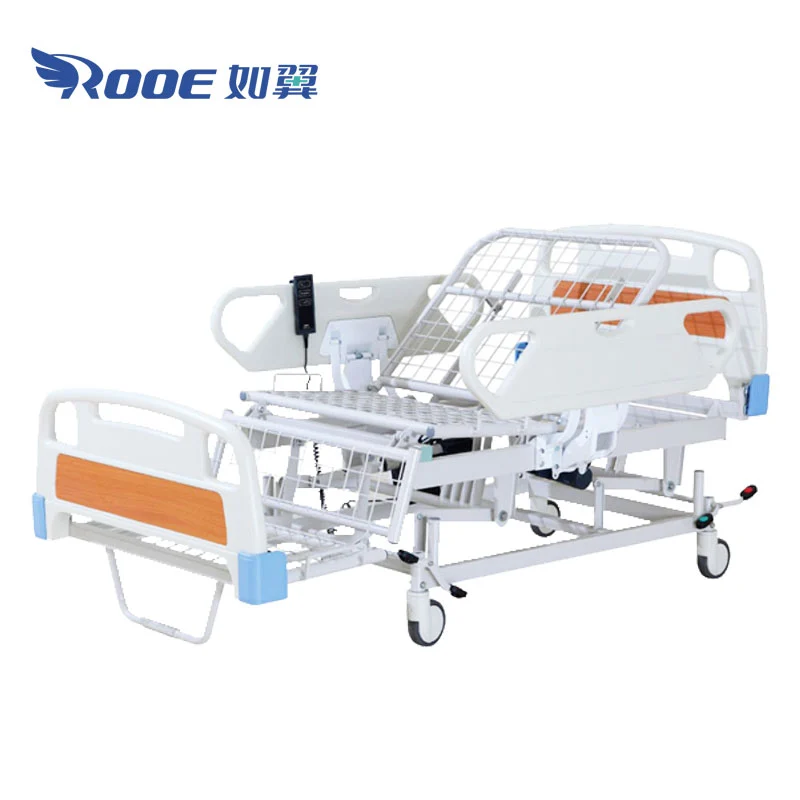
After cardiac surgery or acute cardiovascular events (such as myocardial infarction), patients need to lie still strictly to reduce the heart load. Traditional nursing beds only support simple position adjustment, while new cardiac nursing beds can achieve independent adjustment of multiple parts (such as back, legs, knees) through electric control systems, helping patients adjust to the best posture such as semi-sitting position and cardiac chair position, promote blood circulation and relieve local pressure, and reduce the risk of pressure sores.
For example, some nursing beds use a “C-type rise” structure to achieve back-knee linkage, and the one-button cardiac chair function can quickly adjust to a position suitable for cardiac rehabilitation7. In addition, the flip side panels and side-turning mechanism mentioned in the patent design can prevent the patient from twisting his body when turning over, reducing the pain of postoperative incision traction.
2. Real-time vital signs monitoring
Cardiac nursing beds often integrate a variety of medical monitoring equipment, such as electrocardiogram monitors, blood oxygen saturation sensors, blood pressure monitoring modules, etc., to achieve continuous and non-invasive vital signs monitoring. For example, bedside ECG monitoring equipment can capture transient arrhythmias or ST-T changes, and the data is transmitted to the nurse station in real time, so that medical staff can intervene in time.
Some high-end nursing beds are also equipped with weight change rate detectors, which predict the risk of falling out of bed by analyzing the patient’s body movement frequency, and link cameras for human body recognition, triggering alarms or automatically popping up protective air cushions. Such intelligent designs have greatly improved nursing efficiency and patient safety.
3. Safety protection and emergency support
Heart patients often have blood pressure fluctuations or sudden symptoms (such as syncope), and nursing beds need to have multiple safety mechanisms:
Anti-fall bed design: heightened guardrails, hidden restraints and drainage bag hooks on both sides of the bed to prevent patients from accidentally falling.
Emergency response system: integrated call button, CPR quick reset function (one-button restoration of horizontal position) and power failure backup power supply to ensure normal operation of equipment in emergency situations.
Anti-misoperation protection: If an obstacle is detected during the electric adjustment process, it will automatically stop running to avoid pinching.
4. Rehabilitation training and auxiliary treatment
For patients in the cardiac rehabilitation period, nursing beds can integrate rehabilitation auxiliary modules. For example:
Passive exercise device: promote muscle activity through leg flexion and extension training to prevent deep vein thrombosis;
Data feedback system: record exercise intensity and heart rate changes to provide a basis for developing personalized rehabilitation plans.
Some nursing beds are also equipped with weighing functions to monitor patient weight changes to evaluate the effect of heart failure treatment.
5. Infection control and environmental adaptation
The cardiac intensive care unit (CCU) requires a strict sterile environment, and the design of nursing beds must take into account infection prevention and control:
Easy to clean material: The surface of the bed is coated with corrosion-resistant coating to reduce bacterial growth;
Reduce personnel contact: Reduce the risk of infection caused by frequent contact of medical staff through remote monitoring systems (such as wireless transmission of vital signs data).
In addition, the compact structure and foldable design of the nursing bed (such as a width of less than 1 meter) adapt to the space limitations of the CCU, which is convenient for transportation and rescue operations.
Technological innovation trends
Currently, cardiac care beds are developing towards intelligence and multifunctionality.
Integration of AI and the Internet of Things: predicting changes in the condition through big data analysis, and connecting with the hospital information system to achieve remote diagnosis and treatment.
Humanized experience: memory foam mattress, shock absorption design and home-like appearance relieve patients’ psychological pressure.
Sustainable energy: solar power supply and wireless charging technology ensure that the equipment continues to operate in the event of a power outage.
Cardiac care beds are not only the basic infrastructure for patients to rest, but also a comprehensive medical platform that integrates monitoring, treatment and rehabilitation. Its design needs to take into account both medical norms and humanized needs. In the future, with the advancement of technology, nursing beds will play a more core role in the management of heart diseases.
 |
 |
 |
 |
| BAE312 cardiac bed | BIC800 ICU cardiac bed | BAE502 recovery bed | BAE503 plus hospital bed |
Leave a Reply